
The Complex Project Toolkit: Five Years On – Part 1
Five years ago, in July 2021, my book The Complex Project Toolkit was released into the world.
Unfortunately, just a week before, Sydney went into what would be its final COVID-19 lockdown. I never did get to host the launch event that week, but the book did make it into bookstores, just not in airports.
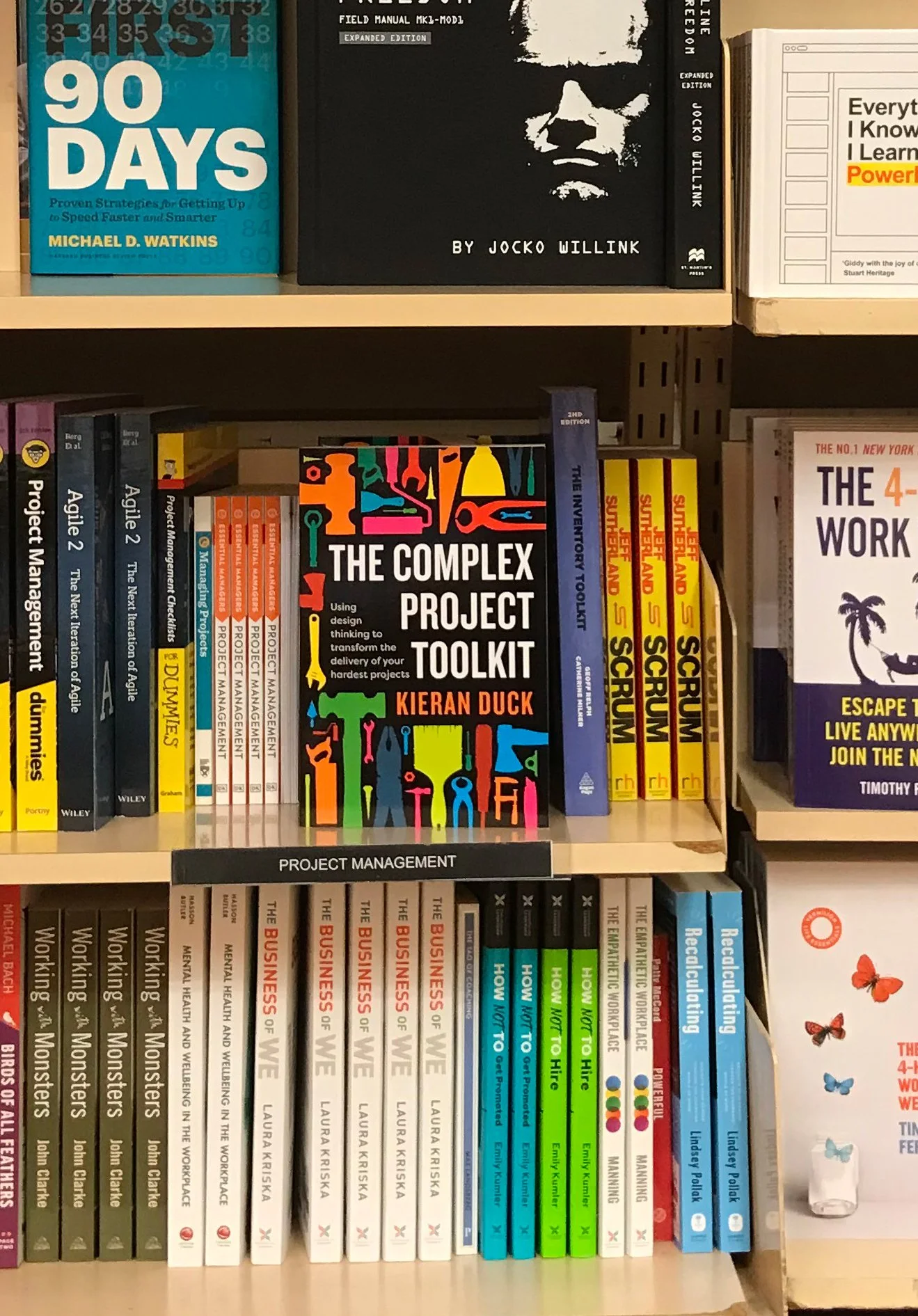
To celebrate its fifth anniversary, I’ve compiled some of the core ideas and will be posting and sharing them over the next few weeks. I will also be dropping in some bonus materials – summaries that didn’t make it into the book, articles I’ve found useful over the years, and what I’ve learnt about complexity since.
What Inspired the Book
I wrote The Complex Project Toolkit because I kept seeing projects struggle when things became ambiguous and emergent. Simplistic and traditional project approaches weren’t tackling the heart of the problem, and in many cases, they were making situations worse.
I believe that projects are inherently creative, but our natural reaction to uncertainty is to try to remove it with analytical rigour and a focus on data and predictability.
However, we can boost performance in complex environments through more humanistic approaches. Sometimes it’s the team dinner that rebuilds trust or a quick reframing of the problem that gets everyone moving in the same direction again.
Core Themes
The book is anchored on four ideas:
Complex projects aren’t just harder versions of complicated ones. They are a fundamentally different type of problem. The nature of the situation is subjective and connected: no individual can see the whole problem, there is no perfect answer, and the situation keeps changing. It’s a social, not technical, problem.
Analytical approaches on complex projects can make things worse. When things are complex, detailed analysis creates confusion instead of clarity, plans keep changing and decisions get revisited. Forcing tight control onto an evolving situation produces false hope, mistrust and exhaustion, and actively lowers the chance of success.
The designer's toolkit is ideally suited for complexity. Designers work with ambiguity and creativity every day. By leveraging ideas from design thinking, we can transform project performance. The key is to shift the relationship with uncertainty by embracing experimentation, giving up knowing the answer, and resisting the urge to tame the problem too quickly, all while keeping a firm focus on delivering the outcome.
The answer is to expand our toolkit. An enhanced approach is required across three layers: mindsets, practices and skills. This doesn’t replace current approaches, it augments them for situations where we don’t have clarity upfront, and divergent motivations or changing opinions are the norm.
These Ideas Still Work
While the world might feel vastly different to five years ago, particularly with the recent rise of AI, most of the project problems remain the same: the disagreement on what problem is being solved, the lack of clarity about what defines ‘done’, the inability to find an agreed path forward, or simply the deep discomfort that comes from not knowing how a project will land.
Delivering well in complexity requires a level of genuine humility – a willingness to admit you don’t know, to seek out the answers in a crowd, and to step away from the belief that you have to control everything.
Success comes from a focus on learning, not control
In complexity, the promise of predictability and certainty is, at best, a dangerous illusion. Blindly applying a standard approach might feel like progress, but it will gloss over the real nature of the issues until they can’t be ignored.
Coming up in part 2: How logical reactions to complexity can actually make things worse.
Want to dive deeper into these ideas? Download the first chapter at www.kieranduck.com
Grab a copy on Amazon or reach out to me directly (kieran@kieranduck.com) if you’d like a signed copy.
