
Part 4 - Lego and Intractable Problems
(Part 4 in a series celebrating the 5th anniversary of my book The Complex Project Toolkit. You can catch up on the previous newsletters here)
Sometimes you can’t know the answer.
Hand a child six standard 2x4 LEGO bricks and ask them to build something. Before they start, try to predict what they'll make.
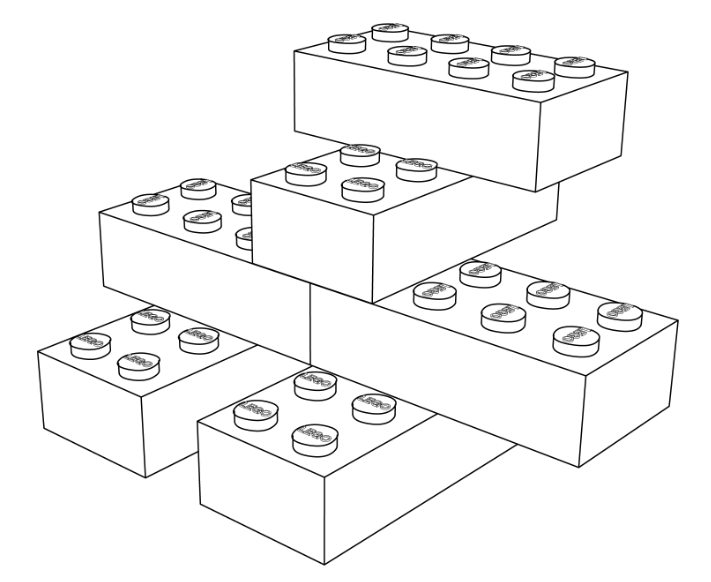
You can't forecast the result with any degree of certainty. With six bricks, there are more than 915 million possible ways they can be combined.
This is the definition of an intractable problem. A scenario that might be solvable in theory, but it's impractical to actually do.
It’s like trying to predict the result of a football match. While there is a clear set of rules, the outcome depends on the temperature, the state of the field, the mood of the players and the noise of the crowd. You could, in principle, model all of it. However, the model would be more complicated than the match itself. Sometimes it is faster and easier to live through the experience and respond to what happens than to try to predict it.
Complexity is Intractable
Complex projects sit squarely in this territory. The true nature of the situation is unknowable until you take action.
A few years ago, a large transformation project required consultation with staff and their representatives. We planned the work and estimated that six meetings should cover it. For reasons that only became obvious in hindsight, one group decided to drag out the process. It wasn't until we were in the room that we found out how the meeting would unfold. Six two-hour sessions blew out to more than a dozen full-day workshops, forcing us to rework the plan after every session.
Action Comes Before Clarity
Complexity requires a shift away from trying to predict the future to a greater focus on learning. Don’t worry about the forecast, take action and respond to what happens.
Construct something tangible - a prototype, a rough model, even a written one-page point of view - so that you (or your stakeholders) have something to react to. “Making” crystallises a fuzzy idea into an object that a group can debate. The goal isn’t to prove what you know, but rather to check if it works, how it could fail, or if it makes sense.
Taking action isn't something you do after you understand what you are doing. Taking action is how you understand what’s going on in the first place.
You never really understand a system until you try to change it – Kurt Lewin
From Prediction to Sensing and Responding
In stable projects, the plan carries the load of deciding what to do next. Complexity requires the ability to read what's happening, recognise whether it matters, and respond at the right level.
This approach only works if you stay close to the front line, build genuine connections across teams, and foster enough safety that people bring you bad news early.
Making this move doesn't mean abandoning rigour or throwing away your plan. It means redirecting energy toward asking good questions and lifting your sights above the immediate noise.
A few simple steps to build this way of operating:
Make space and time to think. Focusing on the urgent, not the important, is one of the most common blind spots
Have the humility to check if you are on the right course and make adjustments when new information comes along
Be aware of the biases you bring. I’ve created a single-page summary here of Bent Flyvbjerg’s article Top Ten Behavioural Biases in Project Management
Know the nature of the complexity that you face (technical, emergent, conflicting agendas, etc.) and build the muscle to match that situation
If your primary focus is on prediction, then any surprise feels like a failure of planning.
Understanding is about sensing what's going on and responding to it, treating any surprise as full of useful information.
Complex projects are more like the six Lego bricks. The different opinions and agendas make them intractable, so stop wasting time trying to predict the final shape.
Trust your judgement, get into action and learn from what happens.
Coming up in Part 5: At some point you have to deliver.
Want to dive deeper into these ideas?
Download the first section of the book for free at www.kieranduck.com.
Grab a copy on Amazon or email me directly at kieran@kieranduck.com if you would like a signed copy.
